


INTELLECTUAL PROPERTY
Patents Intellectual Property
INTELLECTUAL PROPERTY
SANTÉ Healthcare's Core Competencies
Protected by Technology
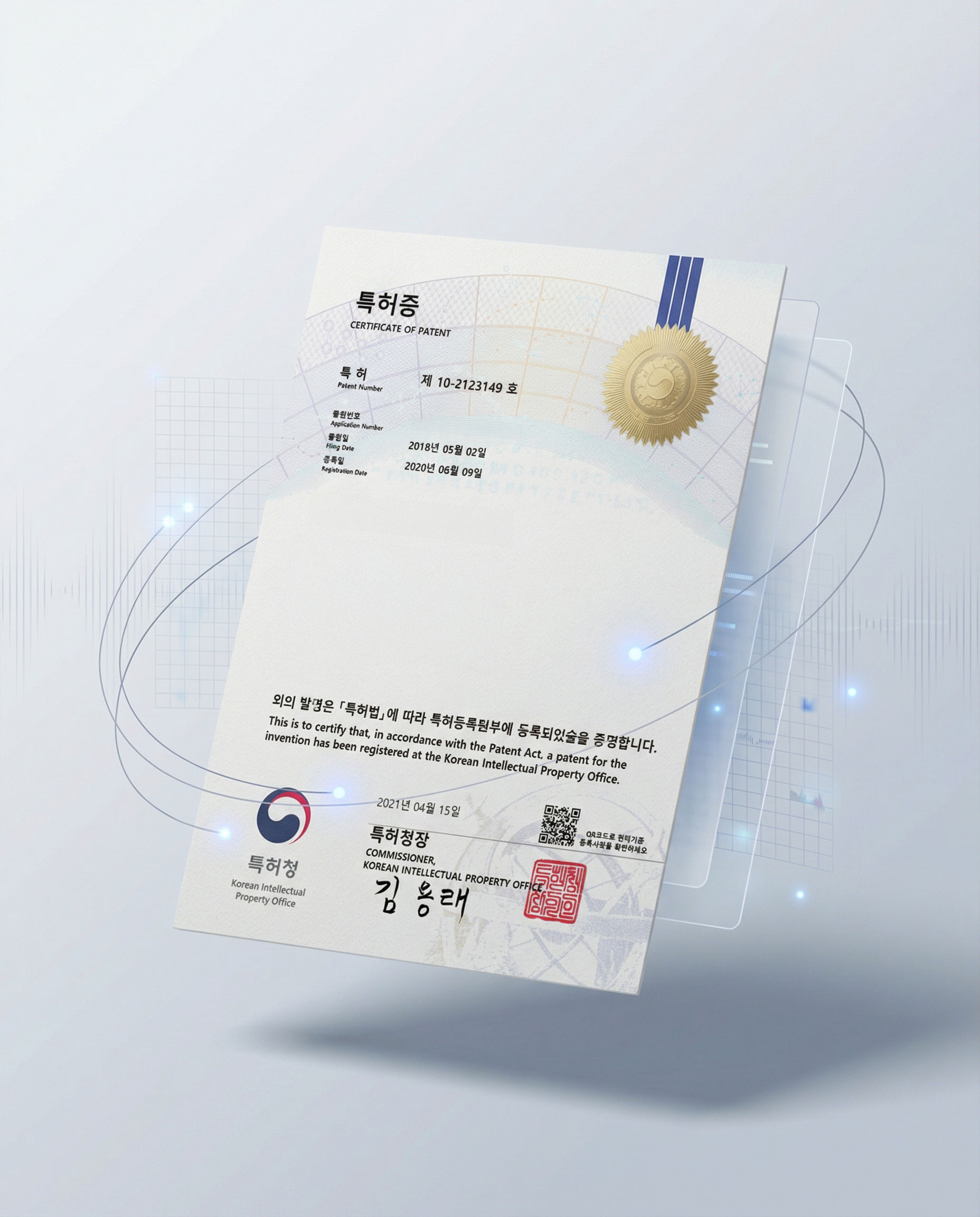
The entire process, from sensor-based measurement technology to signal processing and AI analysis algorithms, is protected by patented technology.
Measurement and Analysis Technologies
Must Be Protected
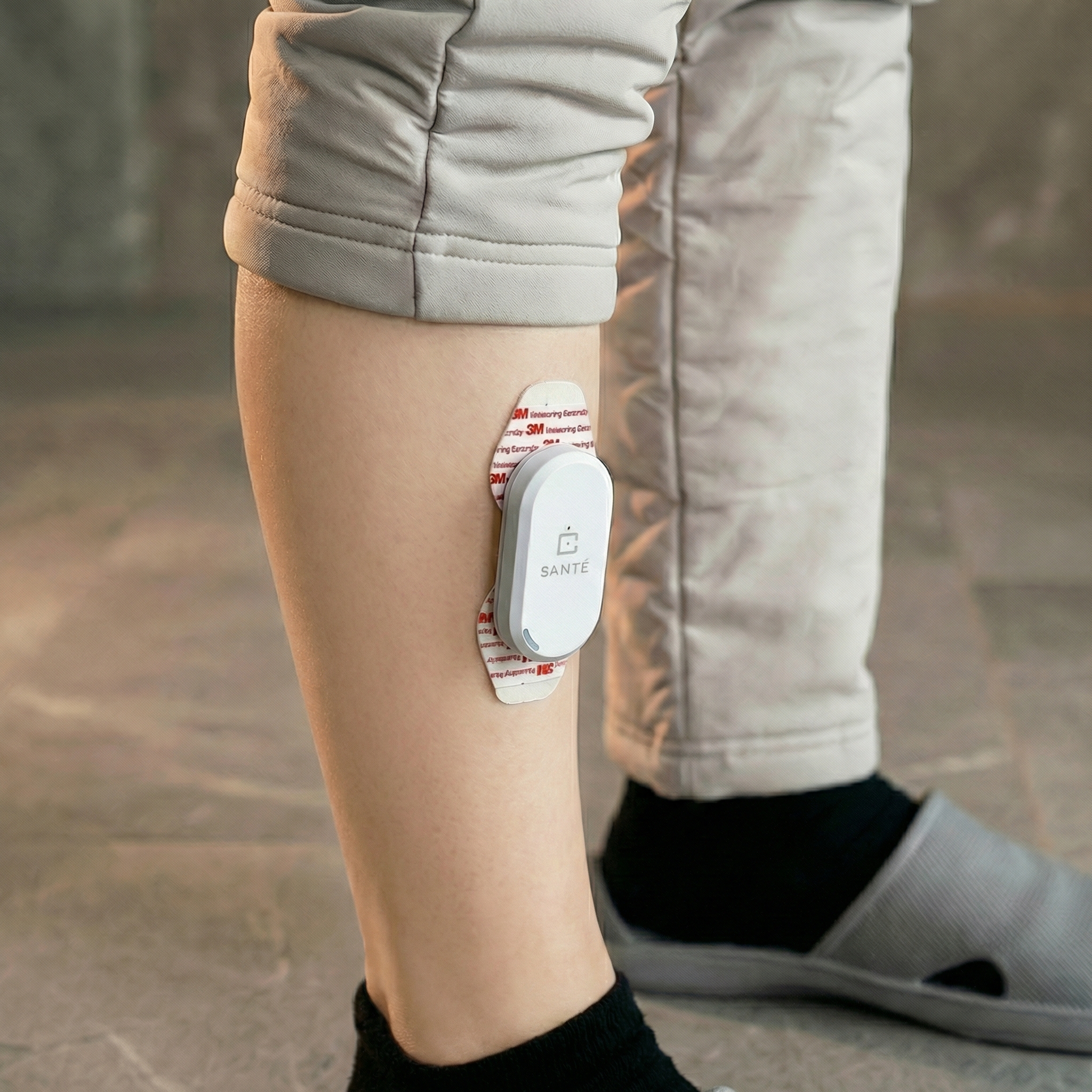
SANTÉ Healthcare precisely measures physical functions,
and is continuously pursuing the acquisition of intellectual property rights,
centered on core technologies that analyze and utilize this data.
Proprietary Technology Structure
Sensor-based measurement methods and data processing logic are based on SANTÉ Healthcare's self-designed technology structure.
Intellectual Property-Based Protection
Core technologies protect technological reliability and sustainability through the acquisition of patents and intellectual property rights.


SANTÉ Healthcare
Solution Application Sites
Utilizes physical function data tailored to medical, care, rehabilitation, and research environments.

INTELLECTUAL PROPERTY TECHNOLOGY
Proving Reliability
with Measurement and Analysis Technology
SANTÉ Healthcare is building continuous patent assets and technological competitiveness, focusing on core technologies that precisely measure physical functions and analyze/utilize the data.
0Cases
Registered Patents
0Cases
Applications in Progress
0Fields
Core Technology Areas
0Solutions
Applied Services
01
Sensor Technology for Accurate
Physical Data Collection
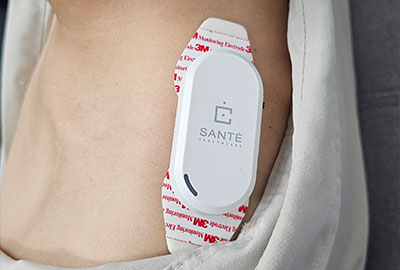
Precisely measures physical signals such as gait, balance, and muscle activity
with EMG/IMU-based multimodal sensing.

02
Converting Physical Signals
into Diagnosable Values
Through wavelet transform and complex indicator analysis, medical professionals’ judgments are standardized into quantitative data.
03
Functional Assessment System
Immediately Utilized in the Field
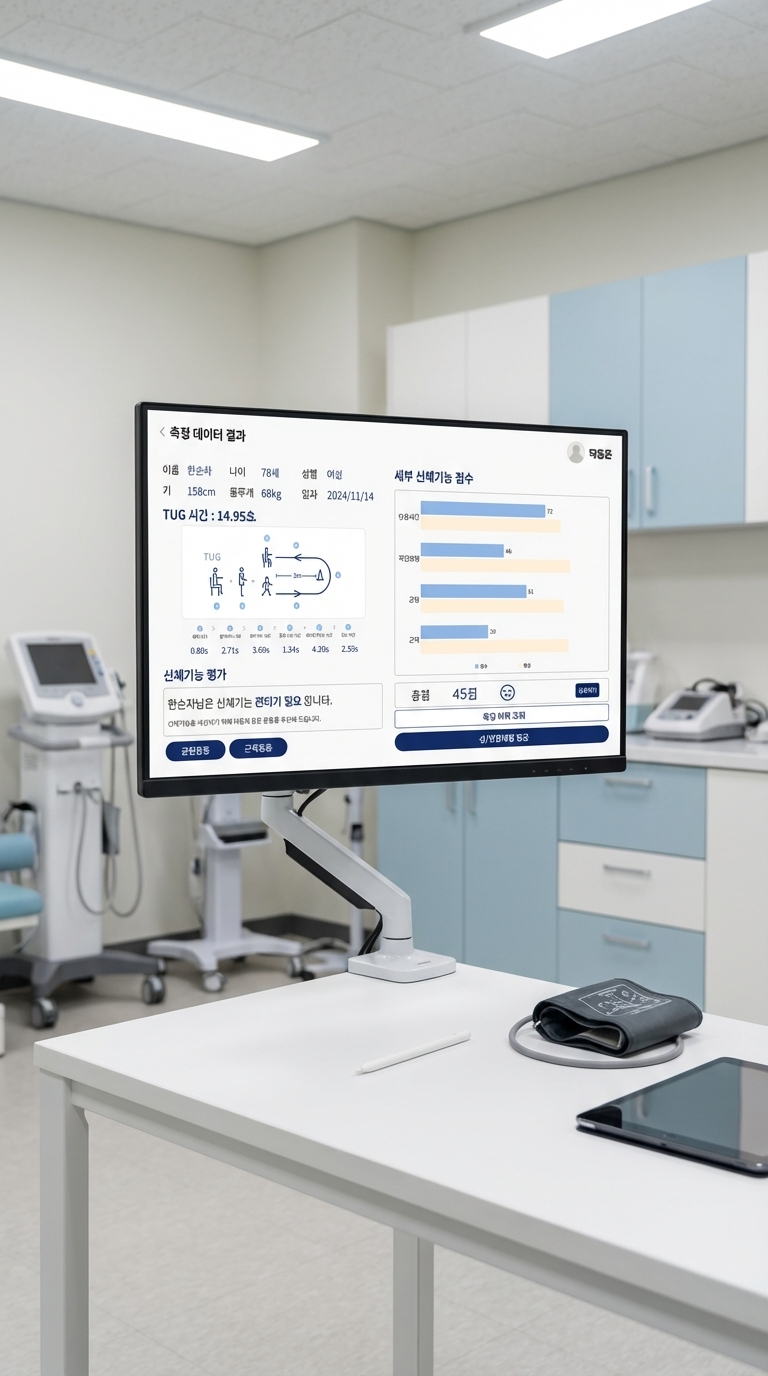
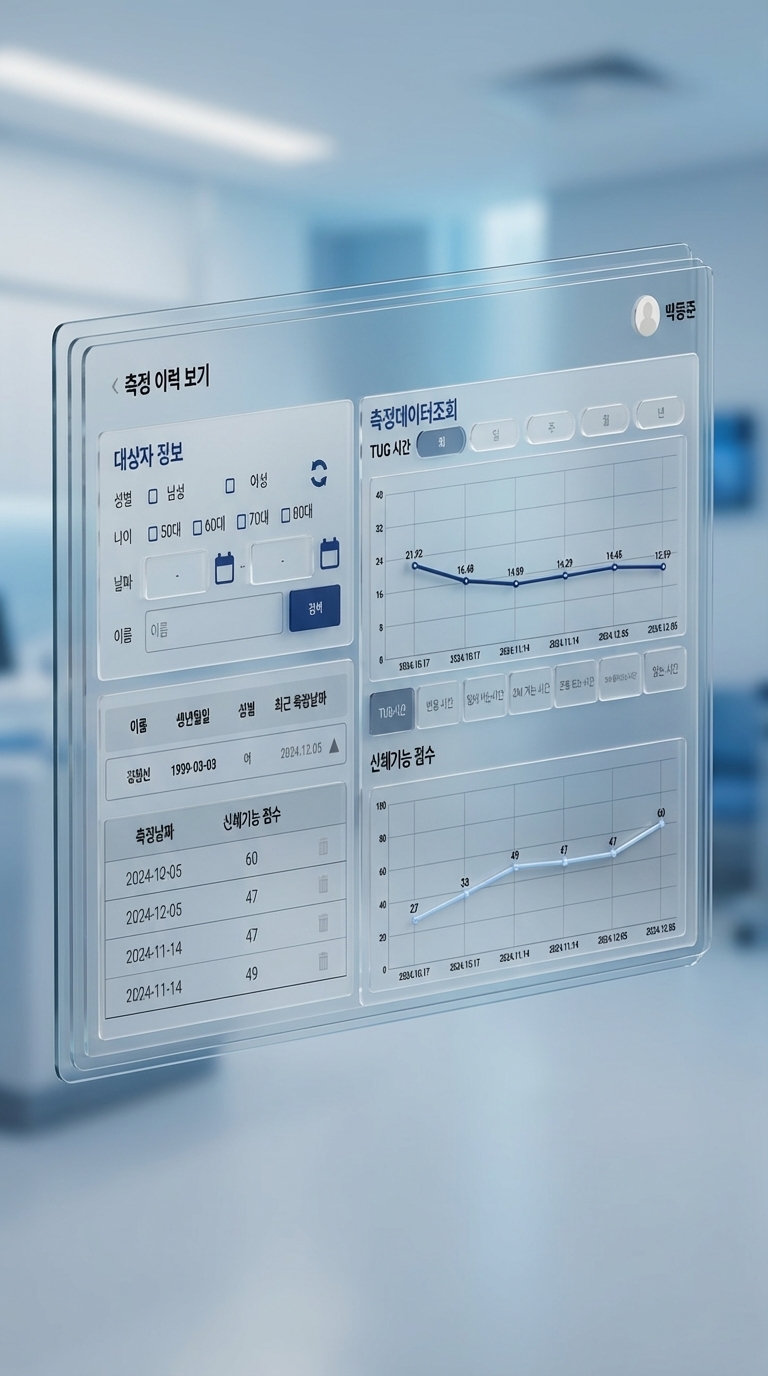
Through SPPB Plus and TUG analysis,
physical function and fall risk are automatically scored.
Medical Public
Field Implementation
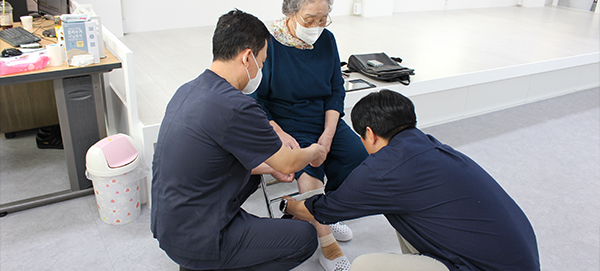
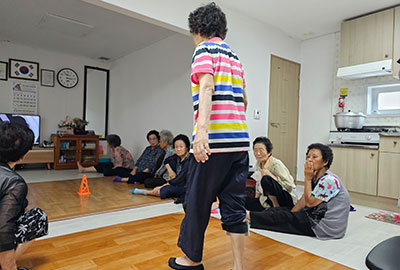
Utilized in actual medical and care settings,
such as hospitals, rehabilitation centers, and day care facilities.
· Hospitals
· Rehabilitation Medicine Departments
· Elderly Community Care Institutions
Continuously
Accumulating Data
Individual test results are managed as data assets
that can be long-term tracked.
· History Management
· Change Tracking
· Individual Group Analysis
Platform-Based
Scalable Architecture
system integration.
· Algorithm Addition
· Solution Integration
· Institution-specific Customization
PROCESS
Process of Protecting Measurement and Analysis Technologies
Structured to present only the essentials clearly and be understood at a glance.
Data Collection
Wearable Sensor-Based Physical Function Data Measurement
EMG / IMU · Protocol-Based Measurement
From measurement methods, signal processing, to AI algorithms,
securing reliability and scalability based on intellectual property.
Field Application
Utilized in real environments for diagnosis, evaluation, and tracking
Hospitals / Rehabilitation / Care · Platform Expansion
INTELLECTUAL PROPERTY
Patent List
The status of registrations/applications and core contents have been organized for quick review.
- Wavelet Transform Analysis : Simultaneous time-frequency analysis using Morlet basis function
- 3 Core Features : Calculates RMS / Mean Scale / Correlation Coefficient
- Automatic Differentiation : Instant determination by automatic comparison with normal reference ranges
- Multi-sensor Fusion : Wireless integration of EMG (shin) + IMU (ankle)
- 3-level Diagnosis : Clear classification of Stable / Unstable / Fail
- Data Objectification : Quantitative data based on standard deviation and angular velocity thresholds
- Non-invasive Measurement : Safe and simple detection using active electrodes
- Comprehensive Analysis : Combined computation of RMS / %MVIC / MF
- Improved Accuracy : Normal/patient differentiation through 'combination value' calculation
- Composite Indicators : Measurement of RMS_MVIC / %MVIC / MDF changes
- Combination Factor (CF) : Combines 3 core data points through formula
- Automatic Determination : Automatic normal/disorder output by reference value comparison
- Speed Dependency : Reflects spasticity characteristics by comparing slow/fast data
- Multimodal : Simultaneous measurement of IMU angle/angular velocity + EMG stretch reflex
- MAS Automation : Provides objective values through weighted algorithm
- Automatic Segment Division : Automatic time segmentation of 6 phases from reaction to seating
- Scoring Model : Score estimation without SPPB execution using linear regression
- Visualization : PCA-based graphical representation of position within population
- Multimodal Signal Fusion Analyzes a combination of external movement data from IMU sensors and deep neuromuscular activation data from sEMG sensors
- Optimized Parameter Selection Extracts the most effective decision parameters for disease prediction using Bayesian Optimization (BO) and Biogeography-Based Optimization (BBO) techniques
- Disease Prediction Modeling Individually calculates the onset probability and risk levels for COPD, Osteoporosis, and Cardiovascular Disease via an OVR (One-vs-Rest) structured XGBoost model
- Automatic Segment Splitting Automatically distinguishes 6 movement stages from the reaction start to sitting down, ensuring objective measurement
- Quantitative Parameter Calculation Produces multi-dimensional data based on inertial signals (postural stability) and electromyography signals (muscle activation and fatigue), moving beyond simple time measurement
- In-depth Index Generation Provides indices for balance maintenance, gait stability, and lower limb muscular endurance in \"Good, Normal, or Poor\" ratings alongside continuous scores by normalizing the calculated data